Air purifier for doves and pigeons
When and why you should get one
If you have indoor birds (doves, pigeons, and even other kinds of birds), you'll notice how they lose quite a lot of feather dust.
Feather dust is a fine keratin-based particulate produced by feathers that continuously break down into the white powder you often find at the bottom of your pets' cage.
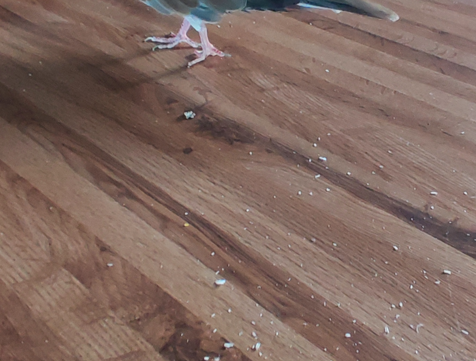
It's important to clean the cages regularly, or you could develop issues such as bird fancier's lung. However, even with a good cleaning routine, you can still be at risk of this illness if you don't own a proper air purifier, especially if you have many birds.
That being said, not all air purifiers are good for your doves and pigeons, who have fragile lungs, and some can even be very dangerous to them.
What air purifier to choose
To avoid any risks for your birds, your air purifier must follow these criteria:
-
HEPA Filter: Your air purifier must have a true HEPA filter. Ozone generators are dangerous, as they harm the cells in the lungs and respiratory airways of both you and your birds.
-
Non-ionizing: Ionizers create ozone that is harmful to a bird's sensitive respiratory system, so make sure your product is non-ionizing.
-
Appropriate for your birds' room size: When looking for an air purifier, make sure its efficiency is adapted to the size of your room. This is usually indicated in the product description.
-
No essential oil diffuser: As stated before, doves and pigeons have very sensitive lungs, so any essential oil diffuser (even with natural oils) is prohibited.
How to use the air purifier
Placement
Place the air purifier preferably at the center of your bird's room. If that's not possible and you need to place the purifier closer to the birds, try putting it slightly higher than them.
Make sure nothing blocks it from drawing in air, or it will be less efficient.
Time
Turn on the air purifier for at least a few hours during the day. If there are several speeds/strength settings, keep it on low or medium most of the time, and you can increase the power for two hours if there is a lot of feather dust (during one of your bird's molts, for example).
If you sleep in the same room as your birds, you can keep the air purifier on at night, as some models have a night mode.
Maintenance
Follow the instructions provided with your product for maintenance.
Make sure you remove the plastic wrapping around your air purifier's filter (some people forget), and replace the filters regularly. Usually, the filter should be replaced every six months.
Proper cage hygiene
Air purifiers do not replace good cage hygiene (and vice versa). Make sure to clean your birds' cages regularly using safe products.