Cleaning your birds' cage with safe products
Why proper cage hygiene is so important
Proper cage or aviary cleaning is an essential part of your birds' care.
Birds produce a lot of waste, and if you don't clean regularly they can develop issues quite quickly such as respiratory problems and it can also impact their feather and skin health.
When cleaning, you should ideally let the birds free roam in a safe room to avoid any stress. All in all when cleaning the cages of cage birds you want to avoid disturbing them as much as possible since it can make them more aggressive towards cage intrusions and can even make them finicky towards eachother because of territorialness.
However, not all cleaning products should be used, as some contain strong chemicals that can harm your bird's immune system or lungs.
Cleaning routine
Spot cleaning
Every day or every two days, you should spot clean your pets' cage.
Spot clean is a simple, quick clean where you pick up any poop quickly so you won't disrupt your birds daily. The fastest and most efficient way is to use a scrapper, then pick up the poops with a paper towel.
However, note that spot cleaning should always be very quick, or should be done less often when the birds are nesting as it can push certain individuals to abandon the nest and lay more eggs which will tire them.
Also, the feeders and water bowls should be wiped clean every day before adding new seeds.
Weekly cleaning
Once a week, proceed with a more thorough cleaning. This can include:
- Sweeping in and around your birds' cage. Cleaning around the cage is important since doves and pigeons lose feather dust which is very volatile.
- Quick wipe of the surfaces.
- Lightly scraping the poop off perches, platforms, and the floor.
- Washing the feeders and water bowls more thoroughly.
Deep Cleaning (Every 3–4 Weeks)
Once per month, proceed with a deep cleaning. This includes:
- Fully scrubbing the bars, perches, and trays.
- Everything listed above.
⚠️ Note
If your birds are nesting, avoid disturbing them and reschedule the deeper cleaning unless absolutely necessary.
What safe products to use for each case
See below a non-exhaustive list of bird-safe products:
| Name | Usage |
|---|---|
| White vinegar and bird-safe enzymatic cleaner | White vinegar is safe. You can spray perches with it and a bird-safe enzymatic cleaner every 3–4 days. |
| Dish soap | Occasionally, you can use a tiny amount of dish soap (Dawn, for example) to remove tough gunk. Make sure to rinse thoroughly. |
| Poop-Off | Poop-Off is a stronger product made to remove bird droppings. It can be useful in cases where there are many birds in an aviary. |
Cleaning tools
To help you clean, make sure you have a set of tools that you use only for your birds' cage cleaning:
- Handled scrubbing brush
- Freezer scraper (very efficient for scraping poop off perches and ledges)
- Mini brooms
- Toothbrush
Drying and moisture safety
When cleaning a feed bowl, make sure to dry it before putting seeds back in.
Minimal residual moisture is safe, but it should not be wet.
Wipe your bowls with a clean towel.
Cage flooring
There are several options for cage flooring:
- Paper or newspapers (cheap, but produces a lot of waste)
- Liners and potty pads
- Rigid plastic mats (reusable)
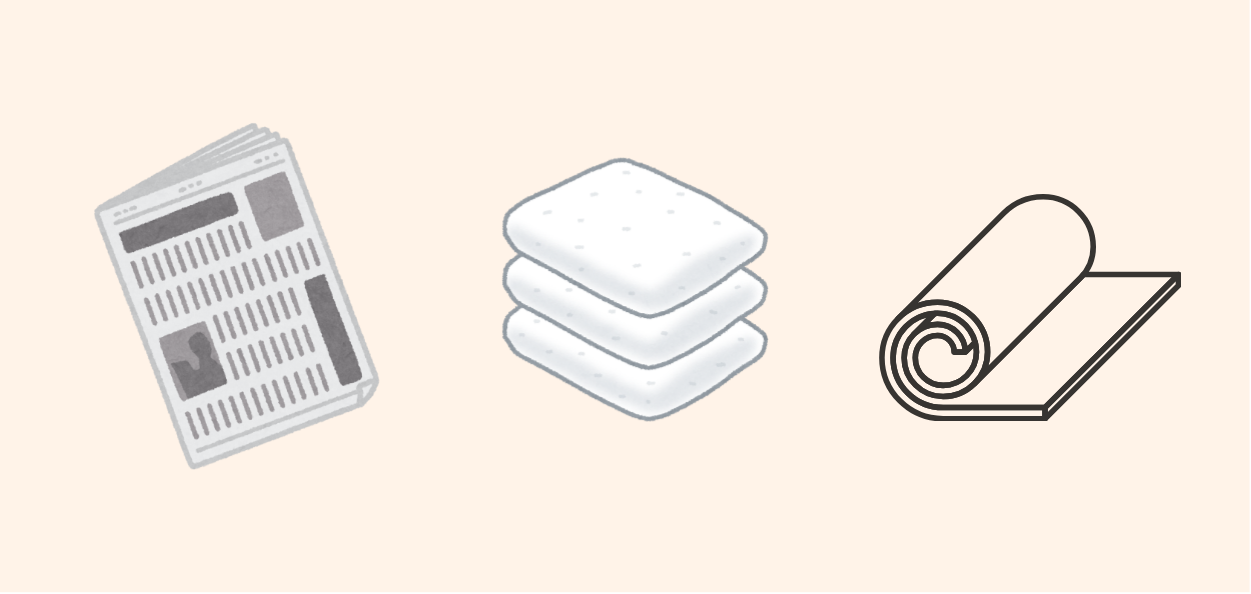
Liner and puppy pads:
If you use any of these for flooring, replace them every week or once per month depending on how dirty they are.
⚠️ Important
Do NOT remove the puppy pads while your birds are nesting to not disturb them.
Dangerous products, practices, and myths
When it comes to cleaning a cage, whether it’s a routine cleaning or a deep cleaning to get rid of parasites, there are things you should absolutely not do:
- Bleach: Bleach is a product too strong for senstive birds like pigeons and doves.
- Dog kennel cleaners: Same as bleach, these dogs/cats products aren't adapted to birds.
- Borax: Borax is toxic to birds and is not veterinary-approved for use on them. It can cause skin and feather damage over time because birds will ingest it through preening.
- Dawn dish soap does nothing against mites or fleas. If your birds show signs of parasites, you should treat them with the appropriate products.
- Cleaning regularly will not stress your birds, except possibly territorial individuals. In that case, cleaning while the birds are free roaming is best.