Ringneck dove
Overview
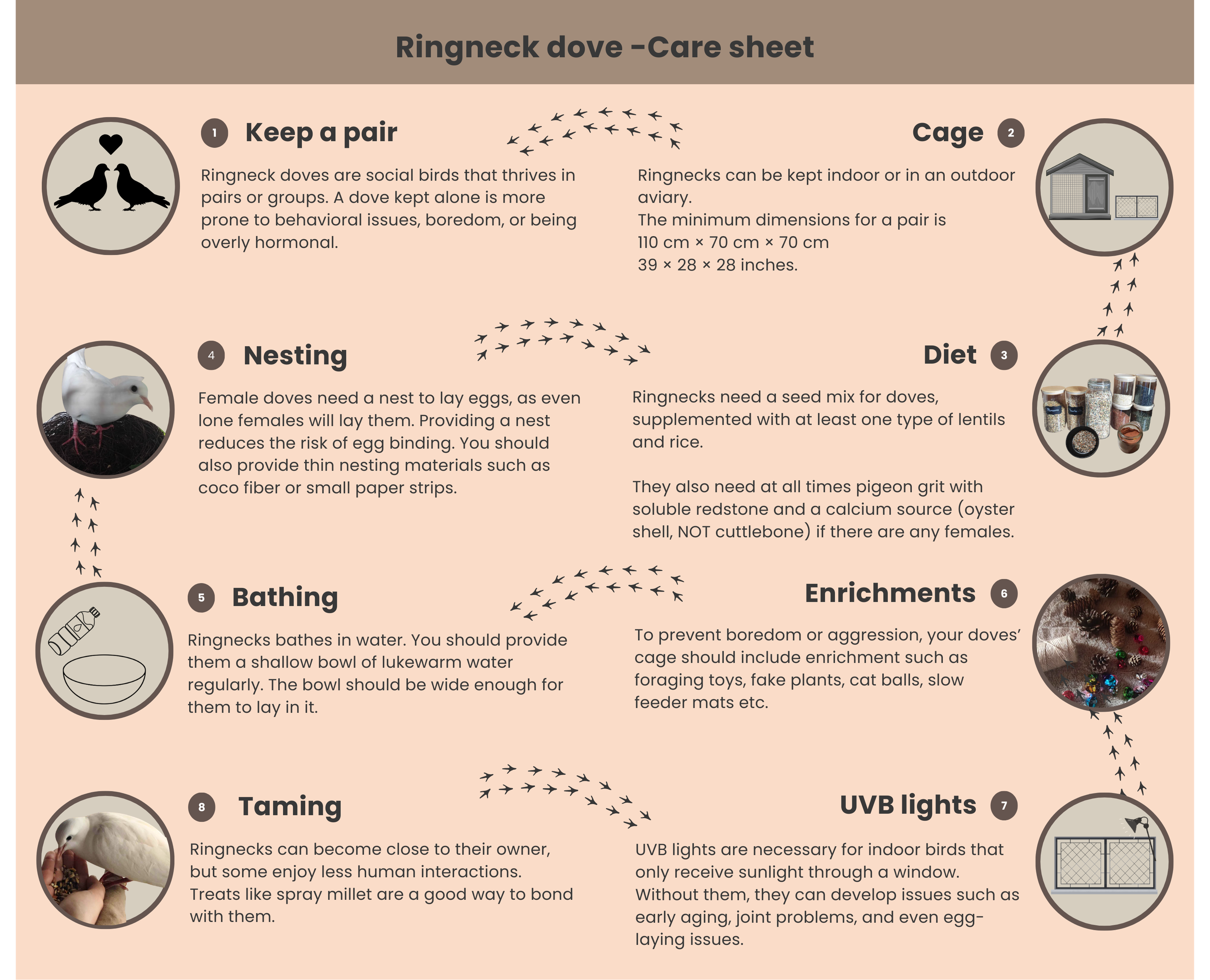
Ringnecks doves are social birds than can be kept in pairs or groups. They are relatively hardy birds who can be kept indoors or outdoor as long as their enclosure is spacious and secured.
Temperament and interaction
Personality
Ringnecks as not as fearful as other kind of doves like diamond doves, but you still need to be careful with your movements around them because they can get scared and loose feathers easily.
They are quite vocal birds, who will do different kinds of cooing and "laughing".
Differences between male and females
Ringnecks have no physical differences between each sex. To determine whetever your dove is male or female, you can only rely on a DNA test, or wait to see if your dove will lay eggs.
Female adult ringnecks will lay eggs, even alone.
Behaviors
Understanding your doves
Driving behavior
When you have a pair of doves, you may see one chase the other around. Males are usually the ones doing so. You will see them follow, push, or peck the other bird until they go to a specific place.
This behavior is normal and shouldn't be interrupted unless the bird displays full-on aggression, like making the other bleed or plucking enough feathers to create bald patches. If your bird displays such behavior, it's likely that there is something wrong in your setup or that it is a husbandry issue.
Call noise
The call noise is the most common noise you'll hear from your birds. Both males and females can do it, although males tend to do it more.
Your doves usually make this call when calling for another one.
The noise can be described as coo-crooo! coo-crooo!
Alert noise
When a ringneck dove is frightened by something like a bird passing by, a sudden loud noise, or movement, they can make an alert call.
As the name suggests, these calls are meant to inform the other birds of potential danger. Usually, you'll see your bird's feathers flat against its body, high on its feet in an alert stance.
The noise can be described as a soft but sharp croo!, repeated several times at small intervals until the potential threat is gone.
Bow cooing
Male ringneck doves bow coo to females as a parade. This specific type of cooing is accompanied by the dove take a deep breath, putting its head low, and putting it back up while cooing.
Nest call
Both sexes of ringneck doves can make nest calls. As the name suggests, doves make this specific type of call when they find a place they deem worth making a nest in. Usually, they'll use the nests you place in their cage but can sometimes do it in other seemingly random places.
Nest calls are typically accompanied by wing twitching.
If your doves disregard the real nests and only make nest calls in other places, you may want to investigate the reason; their nest could be placed wrongly or not adapted for them.
The noise can be described as coo-croorooo!, repeated several times at small intervals.
⚠️ Note
It is important not to encourage hormonal behavior toward humans. If your dove is making a nest call to you, ignore it or place it in a calm space for 10 minutes to cool down.
Hormonal and breeding behaviors
A pair of ringneck doves may display courting or breeding behaviors, especially mated doves.
This is why you must provide a nest if you have a female, as well as thin nesting material like coco fiber; not providing any can make your female dove egg-bound, which can be dangerous for her.
Nest building is also a big part of enrichment for doves and a bonding experience for your pair.
However, if you happen to only have a single dove, you may encounter issues. Your pet may see you as a mate, which you must absolutely not encourage so as not to frustrate your dove. If you see any signs of hormonal behavior (putting the tail up, wings twitching), you must ignore them and stop any interaction until your bird has cooled down.
If you own a female, she will lay a clutch of 2 eggs every month or so, even when no males are around.
With a bonded male/female pair, you will usually notice several phases that happens all year around:
-
Courting and mating: The male dove is going to follow the female around and bow coo to her. They will look for a nest, do nest calls, and mate. During this period, you may see an increasing level of driving behavior, which is described in a section below. You must ensure that your doves have access to a calcium source during that time.
-
Egg laying: Both male and female will be busy "upgrading" their nest with nesting materials. It's the best time for you to scatter some materials around the cage and see how they choose, pick, and place the material in their nests. The female will then lay her first egg in the nest, and the second one 24 to 48 hours later. During this period, they usually won't sit on the eggs.
-
Egg sitting: For a period of 2 to 3 weeks, both doves will sit in the nest. They will usually relay each other, giving each other the opportunity to feed and roam around while the other is sitting on the eggs.
⚠️ Note
Once both eggs are laid, you can wait a day or two before replacing the real eggs with fake ones. To ensure the eggs aren't fertile, you can freeze them for an hour. We do not encourage people to breed their birds since breeding demands a very thorough understanding of your pet's needs and requires you to be able to make strong decisions if something bad happens, like a baby bird being born deformed.
Sometimes, the male will drive the female back to the nest when it's her turn. Note that your birds won't poop inside their nests to keep them clean and will make a "nest poop" once their egg-sitting turn is over, which is significantly bigger (and smellier) than regular poops but isn't an indication of illness.
- Abandonment of the fake eggs: After a period of several weeks, you may notice both of your birds sitting together in the nest. Then, a few days later, they will stop sitting in the nest and start the cycle again. You can remove the fake eggs at this time.
If your birds are laying to many eggs or are abandonning the eggs too quickly, it's a strong indication that something in their setup is wrong. Some doves abandon the fake eggs if they believe it's fake. This is why it's important to wait a few days before switching the real eggs for fake ones.
Related guides:
How to introduce a new bird
Steps to safely introduce a new bird to your existing flock.
How to prevent hormonal frustration and aggression
Avoid frustrating your birds to prevent behavioral issues.
Imprints birds
The socialization problems in birds raised alone.
Cohabitation
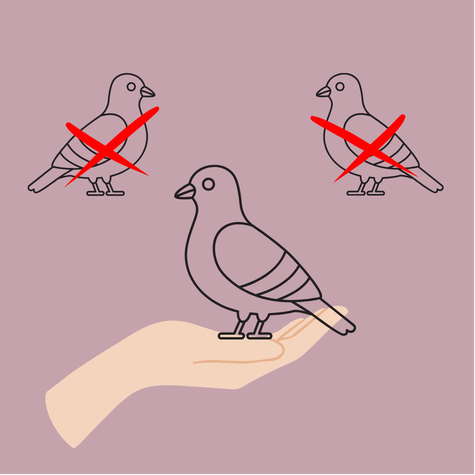
Ringneck doves are very social birds that must be kept by pairs.
A lone ringneck dove is much more prone to night frights, boredom and self harming behaviors like plucking.
It doesn't matter if that bird's been handraised or if you spend hours with it everyday, a human can't replace bird social interactions.
There are misinformations going around that says that having a lone bird is better for bonding, it isn't true. A lone bird will be more prone to develop unhealthy habits like seeing you as its mate, which isn't true bonding and should be avoided at all costs as it causes behavioral issues for your bird.
Related guides:
How to introduce a new bird
Steps to safely introduce a new bird to your existing flock.
Quarantine new birds
How to properly quarantine new birds before introducing them to your existing flock.
Nutrition
Seed mix
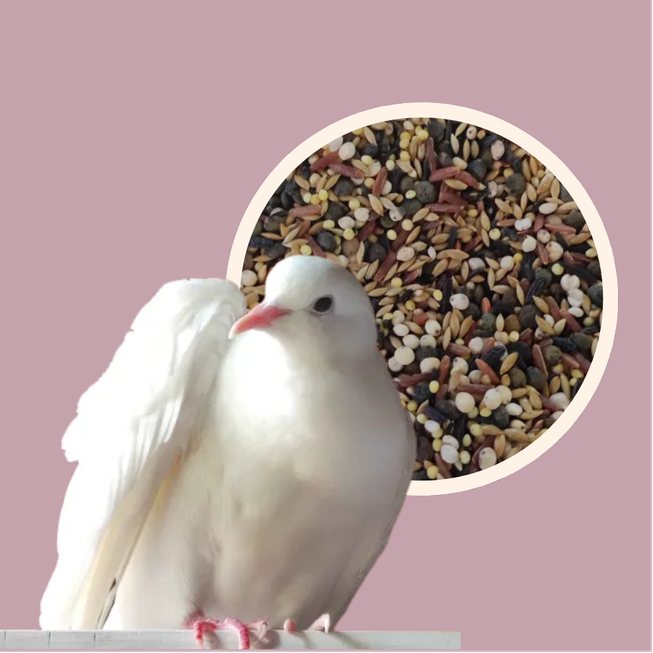
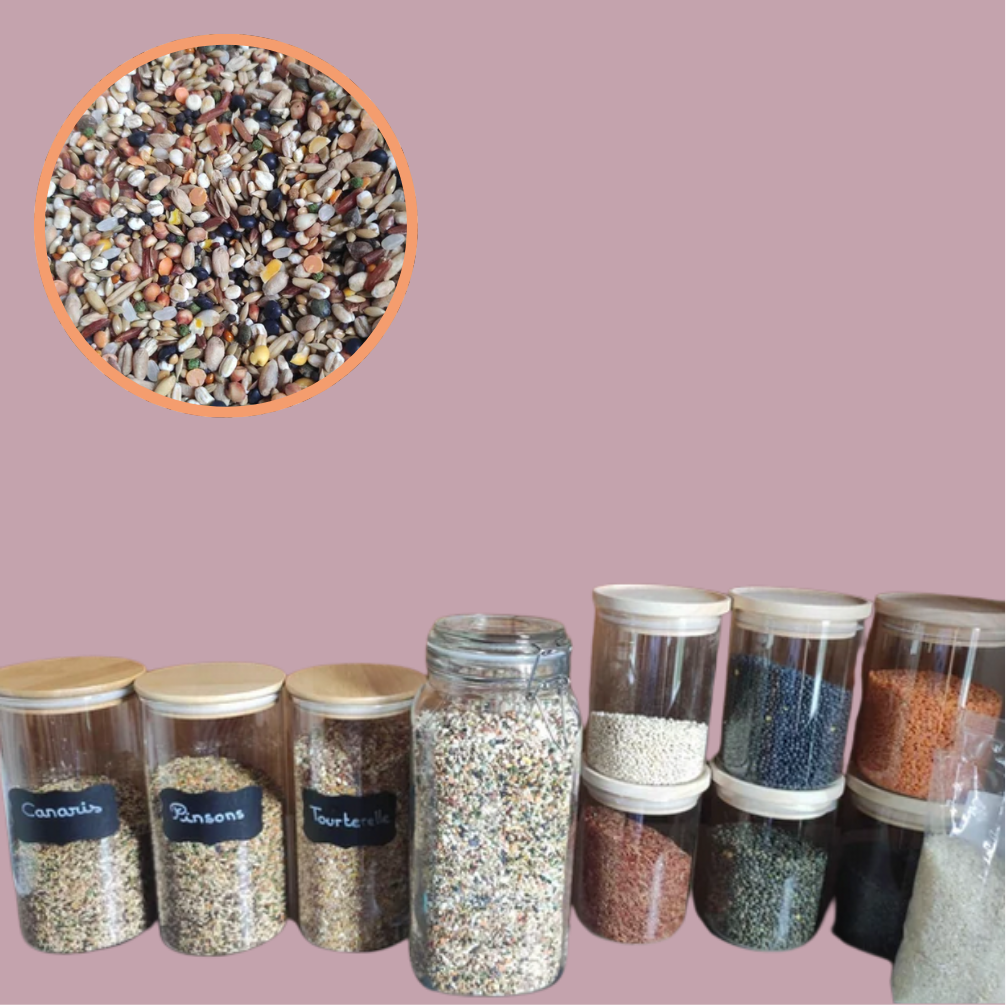
Ringneck doves need a seed-based diet. They shouldn't be offered fruit and can only be offered leafy vegetables in very small quantities as a treat.
A high-quality seed mix should form the base of their diet. There are seed mixes made for this specific kind of doves, but not all are good or complete.
Moreover, it's important to complete the seed mix by adding at least one type of rice and one type of small lentils to it.
For more informations, you can consult our guides on the subjects.
Grit and minerals
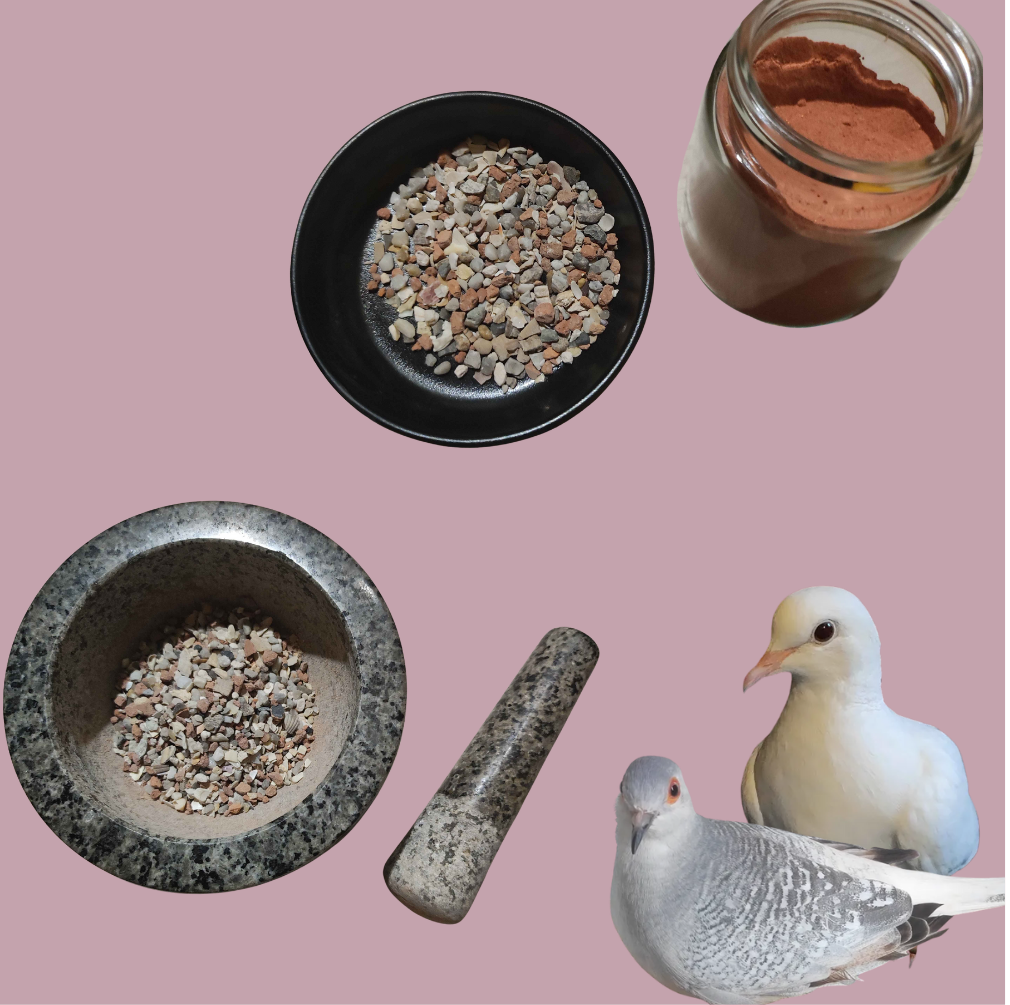
Grit is an essential part of your doves' diet and should be available at all times. However, you need to give them appropriate, digestible grit with redstone and soluble minerals and avoid insoluble gravel or sand-based grits, or poultry or parrot ones.
To complete the grit, you can add a pigeon vitamin-mineral powder on top of it.
For more informations, you can consult our guide on the subject.
Calcium
In addition to a seed-based diet and grit, your pigeons and doves also need a source of calcium. This is even more important if you have any females, as a lack of calcium is a common issue that causes egg problems.
Calcium can be given in the form of powder or crushed oyster shell. It should be given in a bowl separated from the seeds and from the grit, available at all times.
For more informations, you can consult our guide on the subject.
Related guides:
Homemade seed mix for ringneck doves
How to make a complete seed mix for your ringneck and medium doves using Versele Laga's Prestige dove (20kg) product as a base.
Grit
Grit for doves. Give your birds the essential minerals they need.
Complete seed mix - Simplified
How to feed doves and pigeons
Cage and setup
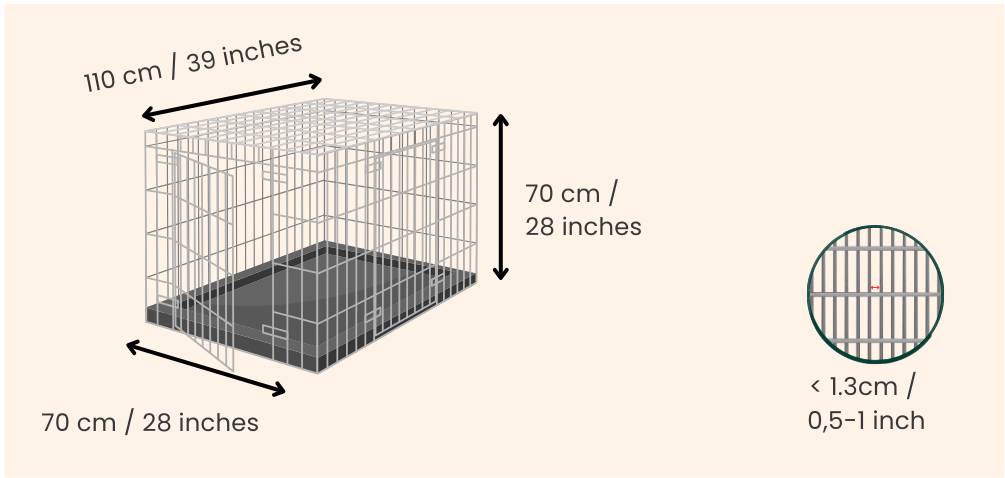
Ringneck doves need horizontal space more than height. A wide enclosure allows short flights and natural movement.
Not providing a cage big enough or providing a cage without enrichment can lead your doves to attack each other out of boredom or frustration!
For a pair, the minimum cage size is as follows: 110 cm × 70 cm × 70 cm / 39 × 28 × 28 inches.
Nests and nesting material
If you own a female, you must provide a nest and thin nesting materials; otherwise, it can lead to your dove having egg-laying issues, which in the worst cases can even be fatal.
Several nests are recommended to ensure they find the right one and avoid them laying eggs in inappropriate places like on the ground or inside feeders. When you have several nests up, your doves may switch from one to another after each clutch.
Bathing
Ringneck doves enjoy bathing in water. Once a week, you can provide them with a shallow bowl of water, big enough for one to stretch in it. They'll usually get in it, lay down in the water and put a wing up like a sailboat.
UVB lights
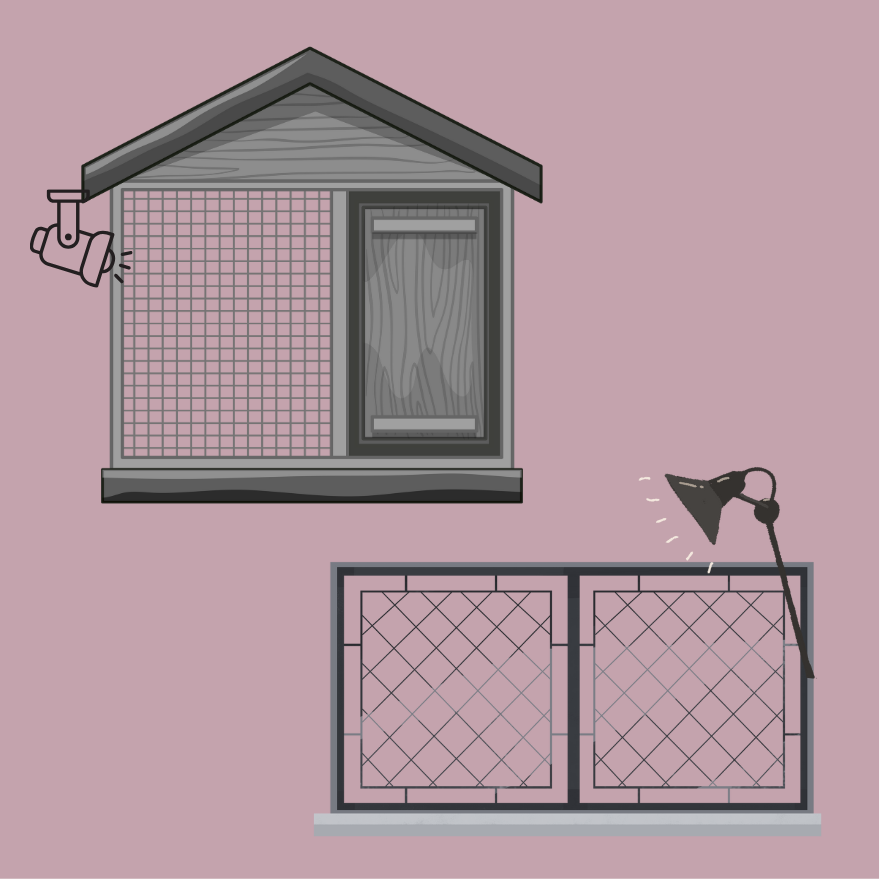
UVB lights are essential for your bird's health if they are indoors.
In the wild, birds synthesize D3 with direct sunlight. D3 is what allows birds to utilize and break down calcium which is primordial to avoid health issues (egg problems, joints, bones, etc).
They cannot get the UVB through a window, so if you have indoor birds you must give them an adapted UVB light.
Not every UVB lights are adapted, you'll need a 20W lightbulb, full spectrum, 2.4% UVB with a reflective shield.
For more informations, you can consult our guide on the subject.
Air purifier
Doves and pigeons naturally loses "feather dust" which can make lead to issues for them and yourself.
Without cleaning regularly and without an air purifier you could develop issues such as bird fancier's lung, especially if you have a lot of birds.
The air purifier must follow specific criterias, or it could harm your pet. Indeed, it must have a True HEPA filter and be non ionizing.
The air purifier should be put preferably at the center of the birds' room, and let on for several hours a day, especially during a molt.
For more informations, you can consult our guide on the subject.
Related guides:
UVB lights
Why and how to use UVB lights for your doves and pigeons.
Air purifier
Avoid respiratory problems for you and your birds.
Sand bath
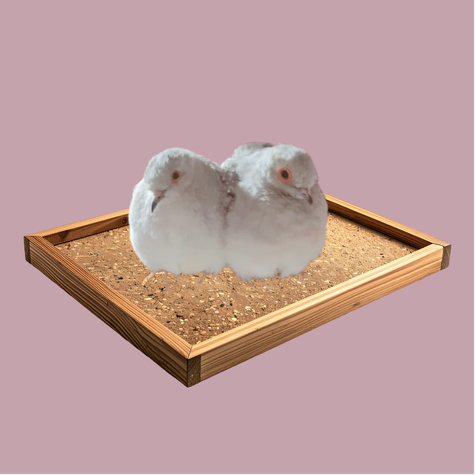
Diamond doves don't bath in water, but they need a sand bath to keep their feathers clean and healthy.
Providing enrichment to your doves
Free roaming
Ideally indoor ringnecks should be free roamed everyday. When you let your birds free roam, it should always be inside a fully closed, safe room. Never leave your toilet door open, as there have been many sad cases of doves hitting themselves and drowning in it. Ringnecks are very curious and playful, make sure they can't have access to anything dangerous like poisonous plants or potted plant soil for example.
Also, you shouldn't let your birds free roam if they are new and not used to you or their environment. New birds are skittish and their instinct will be to fly straight into your windows, which is both very frightening for them and can be dangerous.
Toys
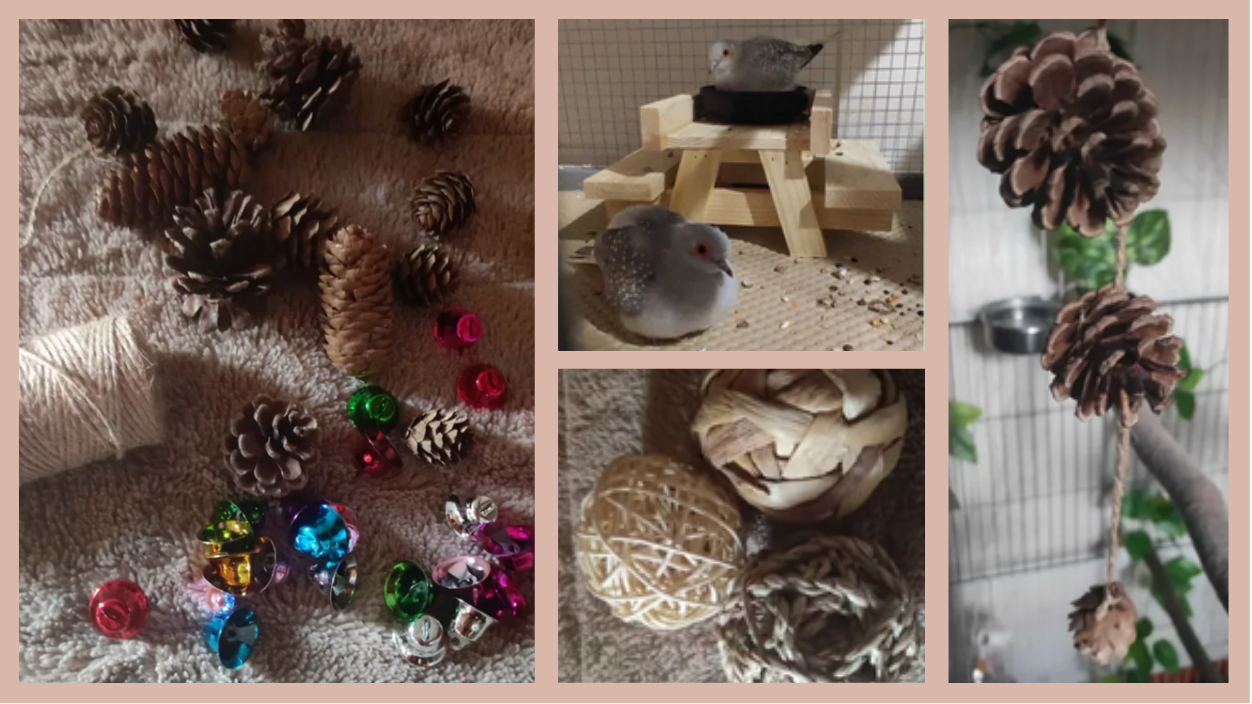
Enrichment is not to be forgotten when setting up your doves' cage. It avoids boredom and other unwanted behaviors like aggression.
Doves are ground feeders and enjoy foraging for seeds. Toys like cat slow feeders or foraging toys are appreciated by them.
Other toys and enrichment include swings, bells, cat balls, nesting material, nest platforms, wooden platforms, fake plants...
Avoid mirrors if you notice any aggression (scratching, pecking) or hormonal behaviors (bow cooing).
Taming and trust building
Like with any birds, taming requires patience and consistency. Some individual can be “cuddly” birds and enjoy pets (in the right places!) from time to time, while other might not be interested in humans. The best way to tame a dove is using food by offering them treats by hand: seeds or millet sprays.
At first, the best way to let them approach you is by offering the seeds in your hand flat totally unmoving as a slight movement can scare them away. Once they learn to eat from your still hand you can try moving your hand very lightly while watching their behaviors for any signs of fear and work your way up this way.
Health tips
Read through our health guides to learn more.
Related guides:
UVB lights
Why and how to use UVB lights for your doves and pigeons.
Bird molts, pin feathers and itchiness
Everything to know about this natural process and how to help your birds through it.
Stop small bleeding
How to stop small bleeding in birds and when to seek veterinary care.