Bird molts, pin feathers and how to deal with itchiness
Molting is a natural process every dove and pigeon goes through at least once per year.
During that period, you'll notice your bird will lose more feathers and dust than usual.
Note that birds will lose a few feathers regularly even outside of molts.
Healthy molts
Frequency and what it looks like
A dove or pigeon will do several molts per year, with one bigger than the others.
The first time you see a big molt, it's quite impressive to see the number of feathers they lose, but it's completely normal.
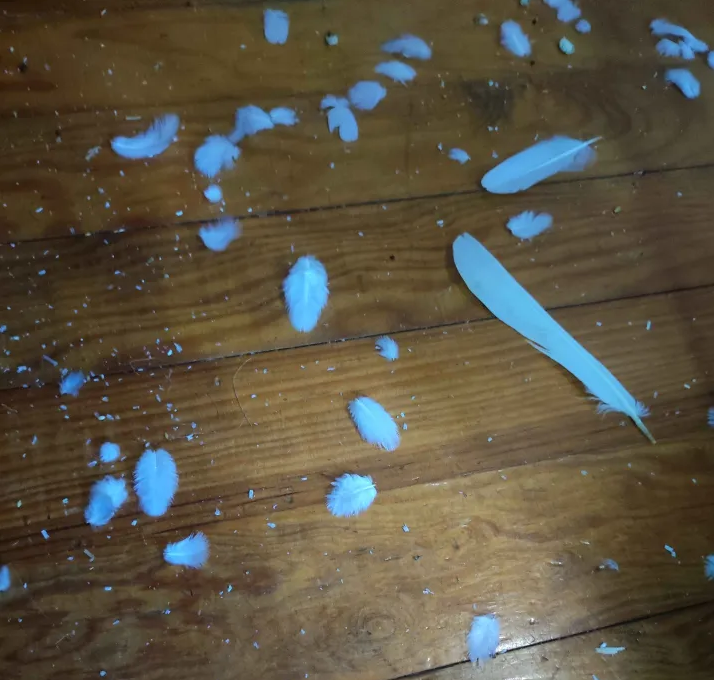
Moreover, you'll notice your birds looking quite disheveled, this is completely normal. This changes from one bird to another, to one molt to another.
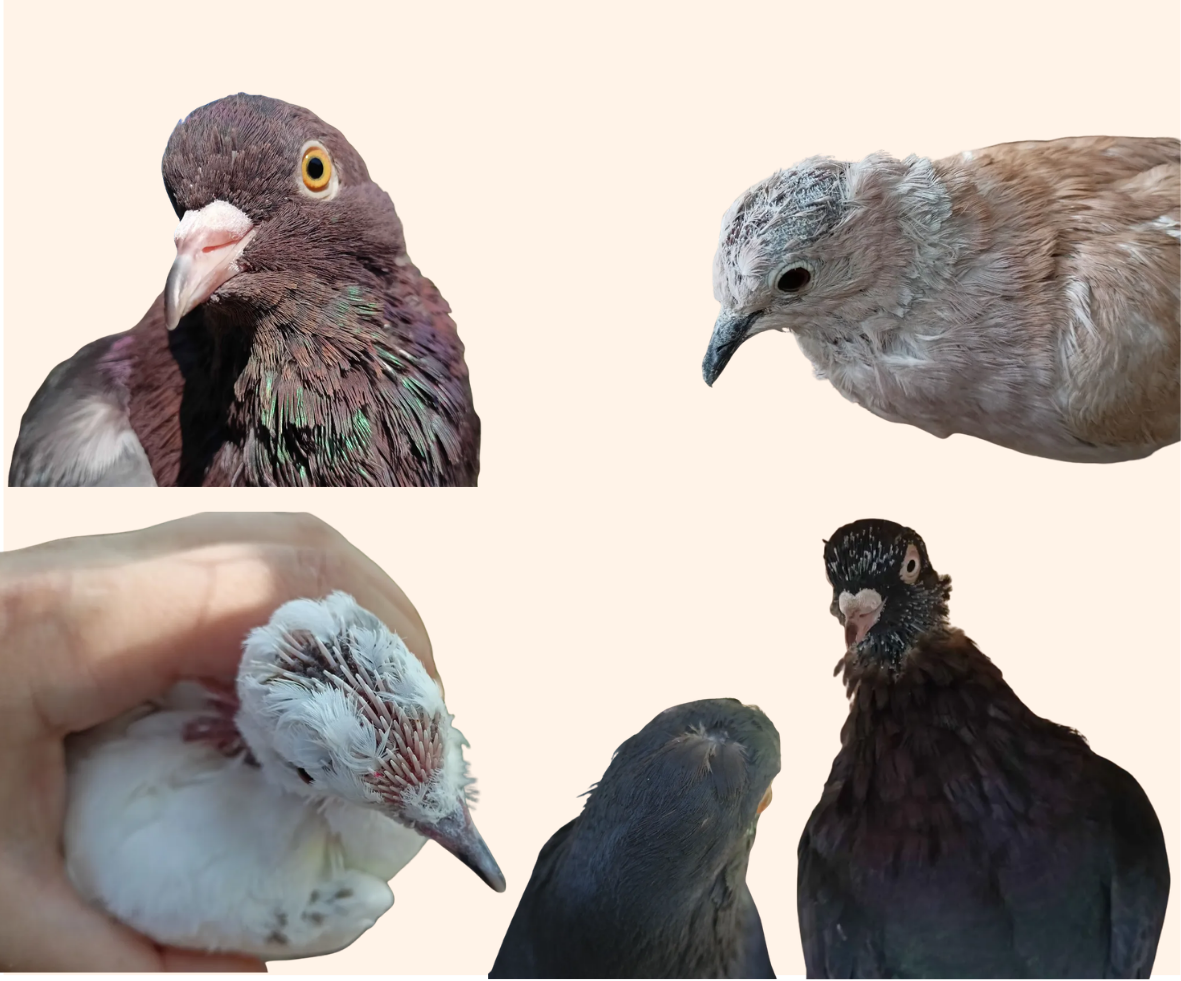
UVB lights for healthy indoor birds' feathers
If your birds are indoors, you need to make sure they have access to UVB every day. Note that they cannot get said UVB from a window, as glass blocks most of the UVB.
This is the reason why indoor dove and pigeon keepers get UVB lights. They are here to help birds synthesize D3 that wild birds get naturally with direct sunlight. D3 is what allows birds to utilize and break down calcium, which birds need to grow healthy feathers among other things.
To learn more about which UVB lights to get, you can read our guide on that subject
The process of a growing feather
During this process, new feathers are going to grow in. This is the moment you'll see pin feathers; feathers that are still growing in a keratin sheath.
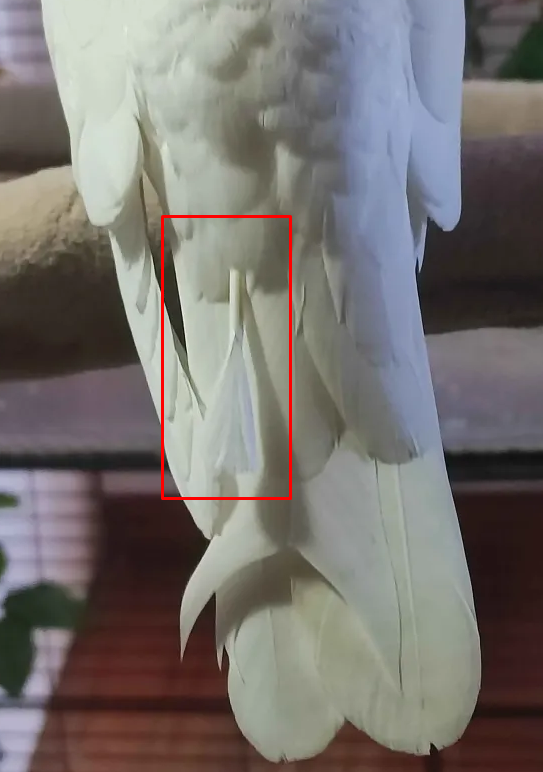
This sheath protects the feather while developing, and you shouldn't remove it. Birds deal with it on their own, usually through preening once the feather is grown and the sheath breaks.
However, some birds can become really itchy due to this process, to the point where some may even self-pluck those pin feathers, leading to pain and some blood spilling! In these uncommon cases, it's important to help your bird relieve that itchiness.
Molt spray to help with itchiness
The best way to avoid your bird being too uncomfortable during these times is getting a molt spray.
These sprays are usually made with aloe and natural antihistamines to help the skin and feathers stay moisturized, which helps with the itchiness some unlucky birds experience during molts.
⚠️ Note
Never remove healthy pin feathers yourself, you'll end up potentially harming your bird.
Cleaning during molts
If you are sensitive to feather dust, you should take extra precautions while cleaning during molts. Ideally, wear a mask while sweeping the floors, as your bird will lose quite a lot of feather dust.
Air purifier
Air purifiers are important for both your health and your birds' health as they catch most of the feather dust that your birds lose throughout the year, which can make you allergic.
While air purifiers should be used all year long, it's even more important to have one during molts. Note that not all air purifiers are adapted to birds, you need a true HEPA filter, non-ionizing product.
To learn more about the kind to get for your birds, you can read our guide on that subject.
Special mention: nests
If you have nesting birds and they go through a molt while egg-sitting, it's important to replace their nesting material once the egg cycle is over.
Feather dust collects in the nesting material and can make the nest pretty dirty even when it looks clean on the surface!
If you notice your bird sneezing abnormally, check the nesting.