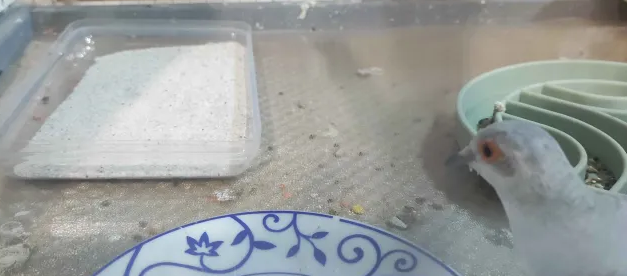
Sand bath for diamond doves
Contrary to other kinds of doves and pigeons, diamond doves do not bathe in water.
In fact, you shouldn't let them bathe in water at all, even if they try to, because they are adapted to live in warm areas of Australia. Just like some rodents such as chinchillas letting them submerge themselves in water can be harmful.
Provide a sand bath at all times
Usually, with ringnecks and pigeons, you only place a water dish in their cage once a week and remove it afterward. With sand-bathing birds, you don't have to go through this process. You can simply place a shallow dish of sand in their cage at all times.
⚠️ Note
Sometimes, your diamond doves may peck at the sand, especially at the minerals. This isn't harmful as long as they don't ingest too much of it. A peck here and there won't cause crop impaction .
Which kinds of sand to use and which to avoid
Correct kinds of sand
Many types of sand are suitable for diamond doves, as long as they meet the following criteria:
- The sand should have small grains but not be dusty.
- Washed play sand
- Reptile sand
Make sure it isn't one of these kinds:
Harmful kinds of sand
The following types of sand should not be given to your doves:
- Calcium sand
- Black sand: it contains calcium, moreover, black sand can be sharp.
- Aniseed sand (even the ones labeled "for birds"): it makes the doves eat too much sand and causes impaction .
- Clay sand and kinetic sand
Cleaning the sand
You do not have to replace the sand regularly. Keep an eye on it; if it becomes too dirty (feather dust, too many droppings), you can replace it.
Otherwise, simply make sure to pick up any droppings that fall into it.
Also, remove any seeds that fall into the sand in order to avoid your birds accidentally ingesting too much sand while trying to eat them.