How to prevent hormonal frustration and aggression in pigeons and doves
When you have pigeons or doves, you have to be careful about how you interact with them and what you put in their cages. Common and seemingly harmless things or actions can lead your bird to become hormonal towards you or inanimate objects.
Doves and pigeons will show hormonal behaviors, you can't prevent that safely like you can with parrots. However, issues happens when your bird is trying to court or mate bond with humans or inanimate objects that are animals/bird shaped.
In these cases, birds tend to show behavioral issues and may become frustrated, aggressive or overly sexual.
Safe hormonal behaviors
Before going through the list of behaviors to watch out for, it’s important to remember that doves and pigeons will show hormonal behaviors; you can’t safely prevent this like you can with parrots.
The boundaries should be clear: if your bird is trying to bond with you or an inanimate object (most often bird-shaped objects) to the point of obsession, this is dangerous for their well-being.
However, these behaviors should not be prevented when expressed in a healthy way: that is, between two birds or directed at an object, as long as your pet does not see it as another bird.
How to recognize hormonal behavior
To recognize these behaviors, it's important to learn your birds' body language.
⚠️ Important
The following behaviors are normal between two birds of the same or similar species of the same sizes. They only become a problem if these behaviors are directed toward you, inanimate objects or other animals of different species. Also note that birds can use objects to try mating with, but it becomes a problem if they see an object or human as a real mate.
Most pigeons and doves share similar signs when it comes to being hormonal:
-
Courting
When a bird displays courting behavior (bow cooing or performing a courtship display), it is a sign that it is hormonal. Pigeons and doves all have different coos and displays. -
Nest calling
Doves and pigeons perform nest calls. This behavior is usually displayed when the bird lowers its head, raises its tail, and makes short, repetitive coos. It is usually accompanied by wing twitching, but the tail up is the clearest indication that it's hormone driven. -
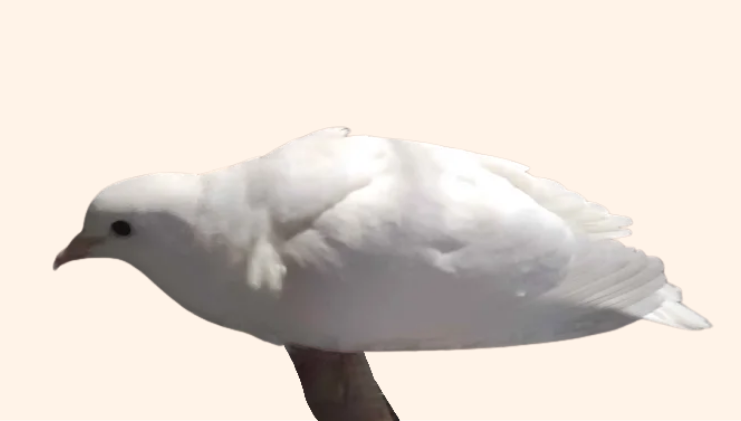
Wing feather display
Male and female birds usually do this to "show off" to potential mates. They will lower their bottom wing feathers. Please note that this is not always hormonal behavior. Sometimes, it can indicate illness, or territorial behavior. This is why you have to analyze their overall behavior and not base your judgment on just one sign.
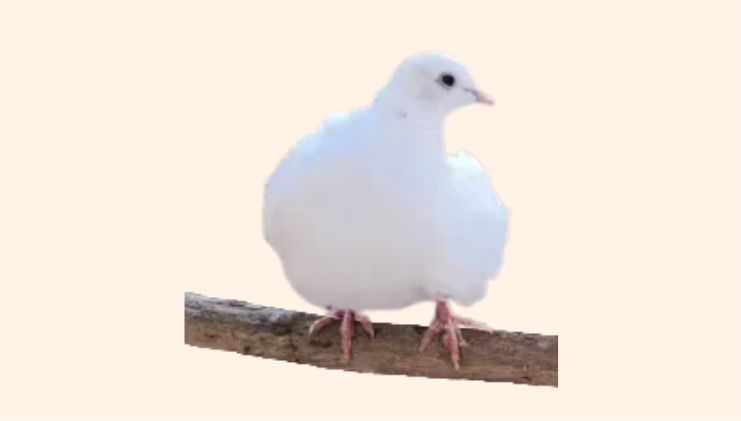
- Preening feathers
Birds can fluff their feathers and preen their back feathers when interested in a potential mate. Note that this is usually accompanied by other signs. Preening feathers alone is not a full indication that your bird is hormonal, as they also do it for grooming.
-
Mounting
While the previous two signs can sometimes be misunderstood by inexperienced owners, this one is more straightforward; a bird mounting an object that ressemble a bird to mate is a strong indication of hormonal behavior. That being said, you may also notice two doves or pigeons mounting each other without mating. Sometimes, it is driving behavior or simply pushing the other bird away. Nonetheless, you should never let your birds mount bird shaped-objects or attempt to mate with your hands, feet, or any part of your body. -
Regurgigating food or begging
Doves or pigeons that are trying to "feed" you or are begging to be fed by opening their beak wide shouldn't be encouraged as this is a mate-only action.
⚠️ Note
If your bird seems to treat an object as a partner (displaying courtship behavior and attempting to mate with it), remove the object. However, if the bird is simply rubbing against an object occasionally without showing bonding or courtship behaviors, it is generally not a concern. It becomes an issue when the bird clearly perceives the object as a mate (courtship + mating behavior). This most commonly occurs with bird-shaped toys, although other objects can sometimes trigger the same response.
Why you shouldn't keep just one bird
If you are keeping only one bird or are considering keeping one alone, you may expose your bird to unnecessary risks.
In addition to being much more prone to loneliness or depression, you significantly increase the risk of your bird becoming overly hormonal.
Your bird will be much more likely to see you as a mate, which is not an healthy way to bond with your pet.
⚠️ Important
There is a belief that being your bird's mate strengthens your bond. This is not true, it only creates unhealthy habits and will negatively impact your bird’s well-being in the long run. It is entirely possible to bond with birds that are already paired, so there is no benefit in encouraging this.
If you want to bond with your bird in a healthy way, check out this guide about bonding with your bird.
Overall, this means that keeping a lone bird is actually more complex, because pigeons and doves are very social and will require a lot of attention from you if they cannot get it from other birds. Even if you have the time, it is far more rewarding to see birds living together harmoniously, as you cannot replace everything a bird friend provides.
Specific case: imprints
Imprints birds are animals that lacks social skills, because they have been raised by humans with no other birds around.
Some can be rehabilitate and learn to live with others, but some become aggressive. There are cases of imprints birds that attack other birds with the intent to kill; those birds can't ever be housed with other birds.
Also note that imprints are specific cases; a lone bird that's close to you doesn't mean it's an imprint if they've been socialized before.
To learn more about the danger of imprints bird, check out this page.
Petting
When petting a bird, there are different rules depending on the species.
Petting a pigeon
Because pigeons have been domesticated for a long time, they are generally more handleable than doves.
Depending on the individual, you may be able to pet them in various places, like you do with chickens.
However, you still need to be cautious and watch for any hormonal behaviors listed above. If you notice any signs while petting, stop the interaction immediately.
Petting a dove
Doves tend to respond more strongly to petting. This is why you should avoid certain areas:
Do not pet a dove on:
- Tail
- Wings
- Back
You can pet a dove on:
- Head
- Neck
- Chest
As with any bird, if you notice a hormonal response to your actions, stop immediately.
Mate-only behaviors
The following are behaviors you should not encourage as they should only occur between two birds. Engaging in these behaviors sends the wrong signals to your bird.
Interacting during nest calling
While free roaming or inside its cage, your bird may stop in a place and begin nest calling. If you see your bird looking at you while doing this, you may be tempted to approach, but you should not. Nest calling is a way for a bird to invite a mate to a spot it considers suitable for nesting. Approaching it encourages this behavior.
If you notice this, ignore the behavior. If your bird continues nest calling in a specific spot while free roaming, place it back in its cage or in a neutral, closed safe room for 10 minutes to calm down.
Helping with nest building
Nest building is a great form of enrichment for doves and pigeons. Providing a nest and nesting materials is important, and is a necessity if you have any female.
However, while you should provide the materials, you should not attempt to build the nest yourself by handing materials directly to your bird. Simply scatter nesting materials around the cage and let your bird collect them naturally.
Letting your bird mount you or objects
As mentioned earlier, allowing your bird to mount you or objects is inappropriate. Some doves and pigeons may become "attracted" to human hands or feet and begin courting them, even if you didn't encouraged this behavior. If this happens, end the interaction or place your bird in a calm, safe space for 10 minutes.
Giving the wrong enrichments
Enrichment is essential for your birds' well-being. There are many types of toys and enrichments that will make your birds happy, such as this list of safe enrichments.
However, some items are inappropriate:
Bird stuffed animals or DIY sock toys
While giving your bird a plush toy may look cute, birds may perceive it as a real animal. They may attempt to court or mate with it. Allowing this behavior can reinforce inappropriate hormonal responses, cause frustration, and negatively impact their future social interactions.
The same applies to DIY "sock plush" toys. If you see your bird treating it like a mate, remove it.
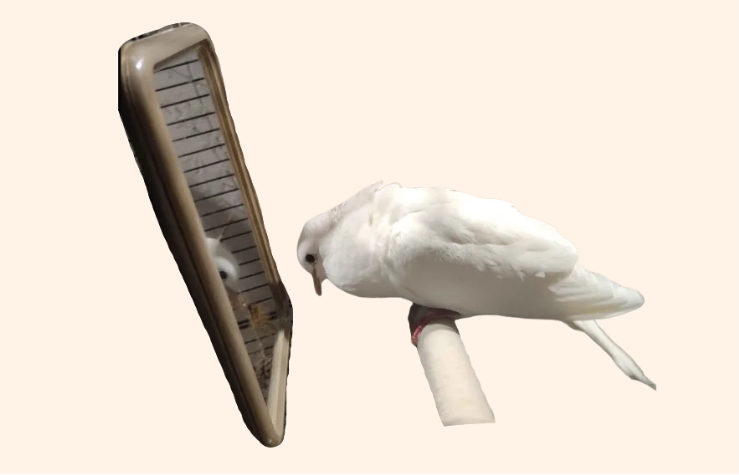
Mirrors
Pigeons and doves can enjoy mirrors. Many pigeons understand that the reflection is themselves.
However, depending on the individual, some birds may have negative responses.
These responses can include aggression, obsession, or hormonal behavior. If your bird shows any of these signs, it may not recognize itself, and it is best to remove the mirror to prevent the situation from escalating.
The image below shows clear signs that the dove doesn't recognize itself